WIFIGATE use case
Smarter management for magnetic-lock doors and controlled entries
Give admins, users, and guests the right level of access by role, share short-term entry that expires on its own, and reduce the pile of shared codes around the front desk.
- Local operation
- Mobile access
- Guest invites
- Access history
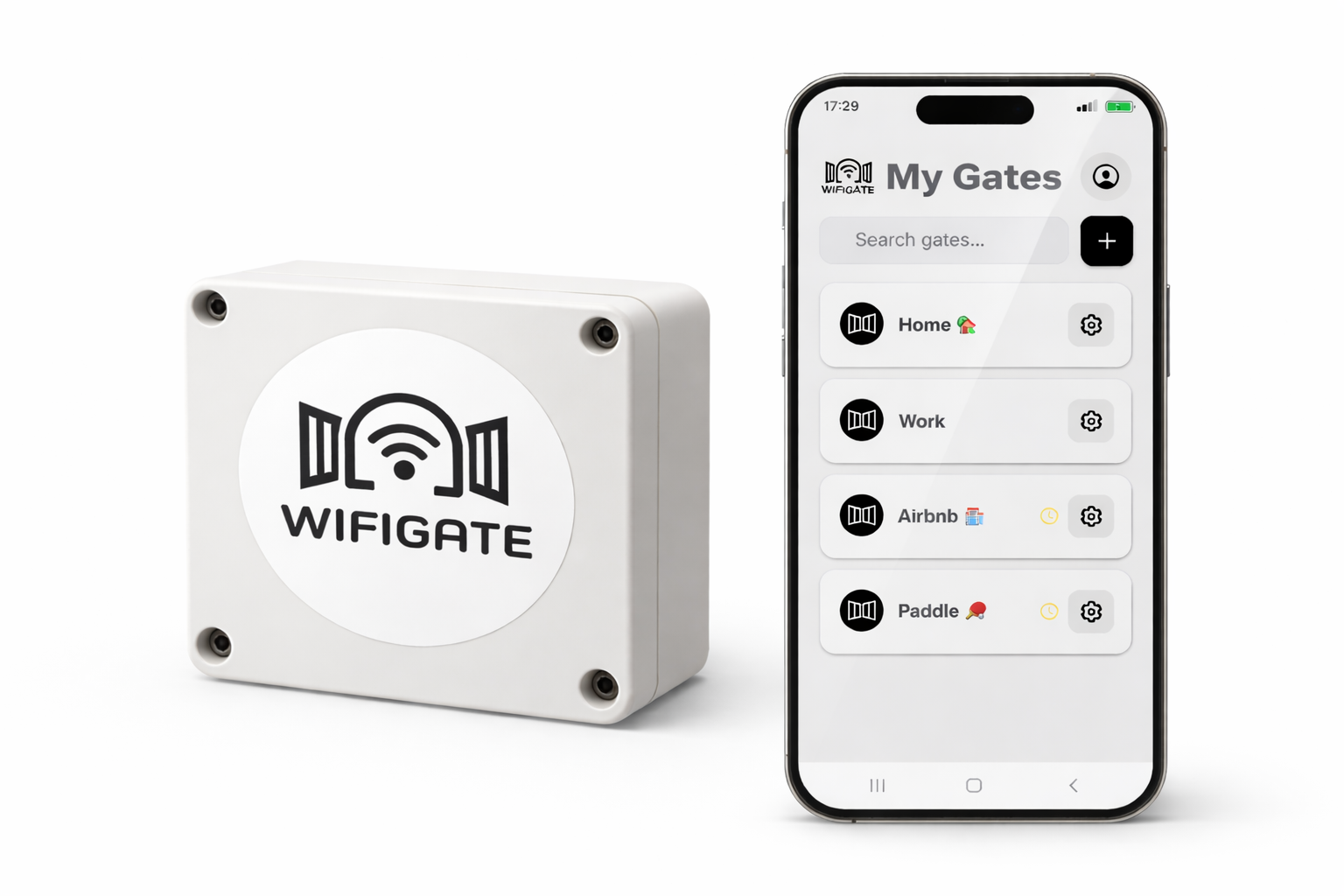
The problem today
Magnetic locks are effective, but the management layer around them is often weak: too many shared codes, too much front-desk dependency, and limited flexibility for temporary access.
Why WIFIGATE is better
Instead of one static method for everyone, access can be role-based. Admins, users, and guests each get the right level of control, and temporary access can be shared and expire automatically.
Key benefits
Tighter control, simpler administration, and a better balance between security and convenience.
- Local operation
- Mobile access
- Guest invites
- Access history
Compared to traditional access
How everyday access changes when control moves to the app.
- Traditional methods
Keys, remotes, or shared codes that can be lost, copied, or passed around
With WIFIGATEApp-based access you grant and revoke from your phone
- Traditional methods
Exposed outdoor switches or keypads at the entry point
With WIFIGATEControl moved indoors to reduce exposed access points
- Traditional methods
No clear record of who opened the entrance, or when
With WIFIGATEAccess history for better visibility and accountability
- Traditional methods
Hard to give short-term access to guests, staff, or vendors
With WIFIGATETime-limited invites that expire automatically
See WIFIGATE in action
Reserved for a niche-specific demo flow, installer walkthrough, or customer handover video.